
Sieve for mealworms
€ 3,50
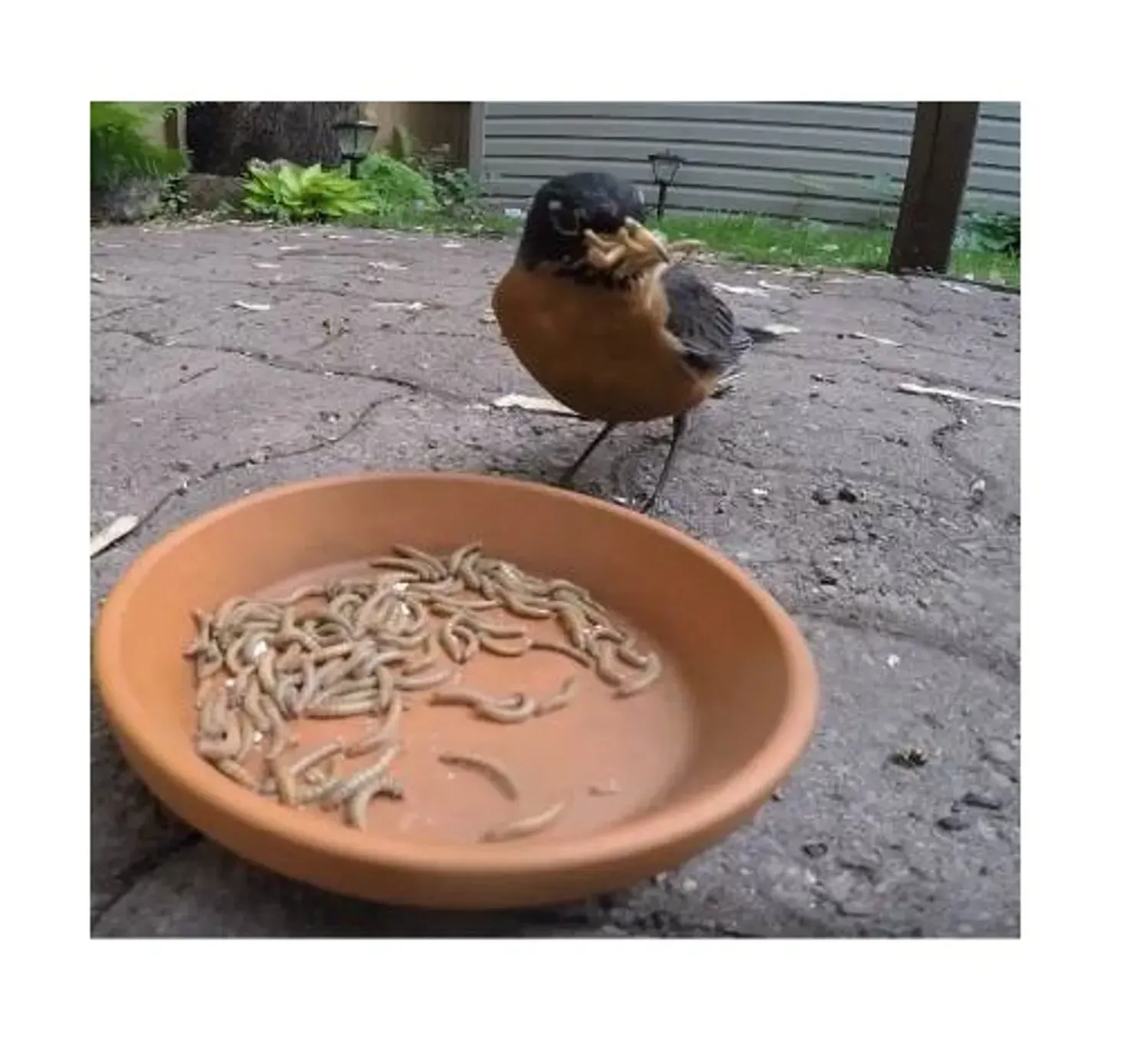
Buy fresh daily live mealworms (Tenebrio molitor) from Drenthe, available in 100 g, 500 g and 1 kg. The promotional price for 1 kg is € 13.50. At temperatures around 25 °C we postpone shipping.
Bred in Drenthe – straight from a Dutch farm.
Packed fresh daily – we pack the live mealworms on the day of shipping.
Keeps for about a month – with good care and cool conditions.
€3.95/100 gram
Choose your quantity
In stock
Buy fresh daily live mealworms (Tenebrio molitor) from Drenthe for garden birds, chickens and reptiles, among others.
Promotional price: 1 kilo €13.50
Available in: 100 g – 500 g – 1000 g
Mealworms will not be shipped when the temperature is around 25 degrees Celsius.
Our live mealworms are the larvae of the mealworm beetle (Tenebrio molitor). You can feed them as a supplement to your animals' usual diet. With three packaging sizes, you can easily choose the amount that suits how often you feed.
Garden birds and aviary birds
Chickens, quails and other poultry
Reptiles such as geckos, bearded dragons and chameleons
Fish and insectivorous mammals
Adjust the portion size to the animal species and feed the mealworms as a supplementary feed.
The package contains live mealworms (Tenebrio molitor). Want to keep them for a while after receiving them? Feed the mealworms some food as well.
Provide the mealworms with food, such as:
Special mealworm feed (available in our shop)
Alternative: carrot, apple or potato (small pieces)
A small piece of carrot, apple or potato also gives the mealworms some moisture. Remove moist residues in time to prevent mould.
Give a small portion that your animals will eat quickly. Adjust the amount and how often you feed to the animal species and the usual ration.
Do not store in the refrigerator if you want to continue breeding the mealworms.
Keep the mealworms cool (10–18°C), dry and dark.
Use a wide, shallow container with a maximum of ±1 cm of mealworms.
Remove the mealworms from the shipping packaging upon receipt. Choose a container with smooth walls and sufficient ventilation. Is the layer thicker than about 1 cm? Then divide the mealworms over several containers.
With good care and cool conditions, the mealworms will keep for about a month. Keep in mind that they will eventually pupate into beetles.
Pupation or mortality is often caused by:
Too many mealworms in one container
Insufficient food present
Moisture cannot escape properly
Check regularly for mould or an overly humid environment. Pupation is also part of the normal development of mealworms. Seeing a lot of losses? Then check the layer thickness, the food and the ventilation, and remove moist or mouldy food residues.
Technical specifications
Feature | Specification |
|---|---|
Product | Live mealworms |
Scientific name | Tenebrio molitor |
Life stage | Larva |
Origin | Drenthe, Netherlands |
Packaging weights | 100 g, 500 g and 1,000 g |
Use | Live supplementary animal feed |
Storage temperature | 5 –18 °C |
Indicative shelf life | About four weeks with good care |
Shipping | Packed fresh daily. At approximately 25 °C or higher, shipping is postponed. |
Order live mealworms directly from Drenthe now – fresh, responsible, safe for pets and ready to use.
Fast shipping
Store them cool, dry and dark at 10–18 °C. Use a wide, shallow container with sufficient ventilation and spread the mealworms in a layer of at most about 1 cm.
With good care, live mealworms keep for about a month. During storage, some may already pupate. In the refrigerator you can keep them longer, but then you usually cannot continue breeding with them.
Yes. You can feed live mealworms in small portions to chickens, quails, garden birds and aviary birds as a supplement to their usual feed. Our mealworms are bred in the Netherlands and are therefore safe to feed to animals.
At temperatures around 25 °C we postpone shipping. This way we limit the risk of overheating during transport.
You can give them special mealworm feed. A small piece of carrot, apple or potato gives them some moisture. Remove moist residues in time to prevent mould.
Our storage advice is a cool place at 10–18 °C. Do you want to continue breeding the mealworms? Then store them outside the refrigerator. In the refrigerator, the mealworms stay in the worm stage longer.
Yes, you can feed them as a supplementary feed to insectivorous reptiles such as geckos, bearded dragons and chameleons. Adjust the size and amount to your animal.
A mealworm is the larva of the mealworm beetle. Once the larva is fully grown, it pupates. A beetle eventually emerges from the pupa. Beetles and pupae are also popular and healthy food for, for example, chickens.
Check whether they are getting enough food, whether the container is properly ventilated and whether the mealworms are lying too thickly on top of each other. Remove wet or mouldy food residues and divide the mealworms over several containers if necessary.
10 reviews
Showing 3 of 10 reviews
Cebu2025
heb ze weer besteld iedere maand, mijn vrouw is er gek op.
Reply from Wormenkwekerij Wasse
Haha, Super!
marja plouvier
vogels zijn gek op de meelwormen. Zitten te wachten op de "voertijd
Reply from Wormenkwekerij Wasse
Dat is goed om te horen, laat ze maar lekker smikkelen :)
Mepi Verduijn
geweldige levering, we moesten allen ze gaan vangen in de doos, ze waren ontsnapt was hilarische om ze zo in de doos te zien kruipen, dank jullie voor de meelwormen. we beginnen met kweken en daar zullen onze kipjes blij mee zijn
Reply from Wormenkwekerij Wasse
Beste Mepi, Bedankt voor je delen van je ervaring. Is het bakje stuk gegaan? Gelukkig dat ze de doos niet uitkunnen en hebben genoten van extra leefruimte ;) Veel succes met kweken!!! Mvg Frank
Offers, tips and tricks for composting and improving your soil


