
No reviews yet
Worm Tower
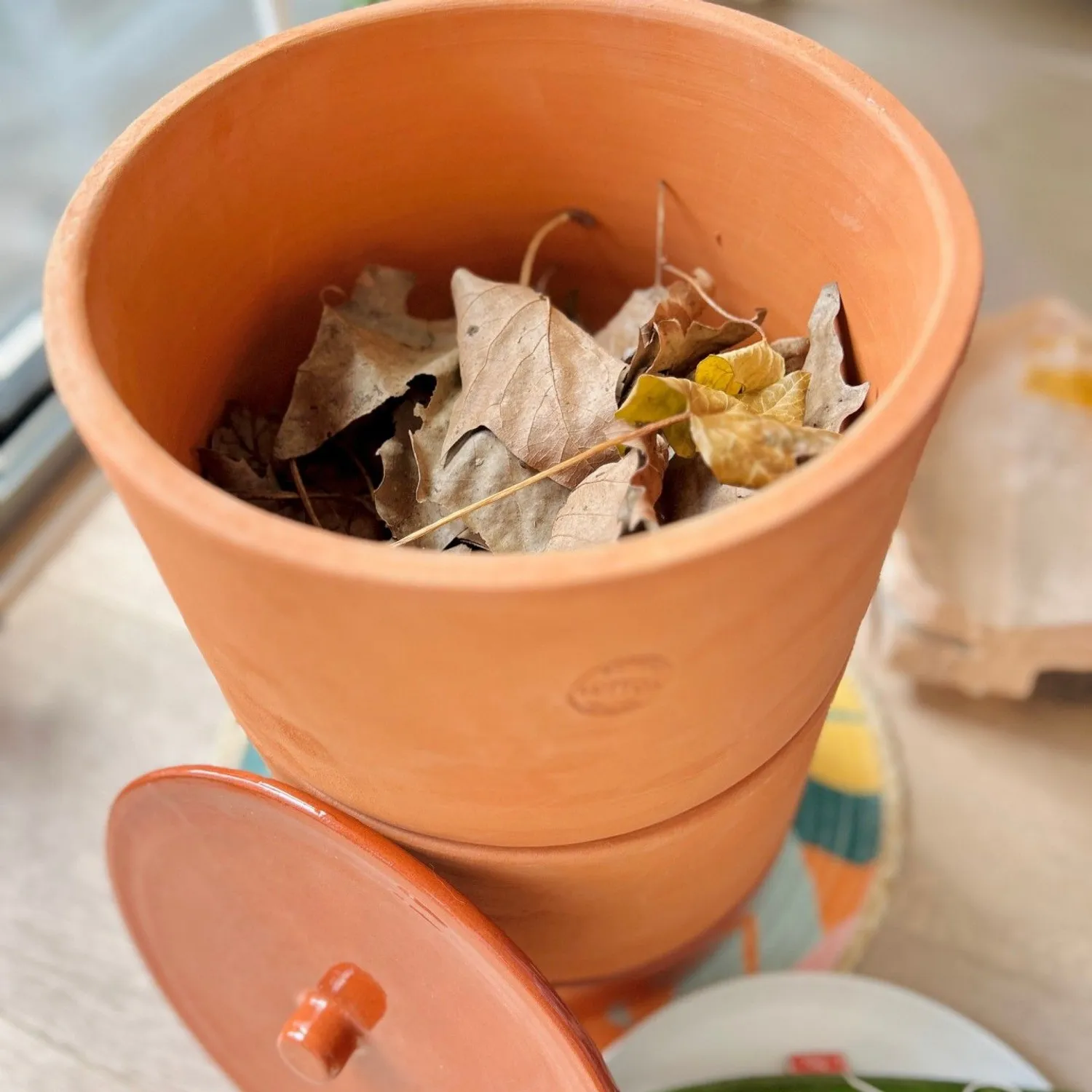
Een compacte keramische wormenbak waarin je bovenin voert en onderin wormencompost oogst.
Twee afzonderlijke etages van elk 8 liter.
Gemaakt van keramiek - Geen plastic
Poreus aardewerk laat vocht verdampen, waardoor een aftapkraan overbodig is
Met een diameter van 26 cm geschikt voor een kleine ruimte.
€150.00
✕Out of stock
1
Send me an email when the product is back in stock.
Secure payment
iDEALKlarnaSEPAKBCPay
Shipped within 1-3 days (NL)
Free pickup at our location
4.8 rating on Google
Goes well with


Description
Ceramic Worm Tower – Make Your Own Worm Castings from Organic Waste | Sustainable Worm Bin
The ceramic worm tower makes it easy to produce your own super fresh worm castings from your own vegetable, fruit and garden waste. With a total height of 41 cm, two tiers of 16 cm high and a capacity of 2 x 8 litres, this sustainable tower offers plenty of space to compost efficiently and without odour. With a diameter of 26 cm, it fits in any garden, balcony or kitchen corner.
This worm tower converts your organic waste into high-quality organic nutrition while simultaneously reducing your waste pile.
The great advantage is that this tower is made of ceramic and not of plastic.
Separating waste with the worm tower – Fun, educational and sustainable
Separating waste is becoming increasingly important, and with this worm tower you can contribute in a fun and informative way. You simply use your own vegetable scraps, fruit waste, coffee grounds and other organic material, after which the worms convert it into rich worm castings. For children, it is wonderful to follow the process step by step – composting becomes a small, fascinating hobby.
Is it a lot of hassle? Absolutely not
The system works very simply:
Add some organic waste now and then
The worms do the rest of the work
Once one tray is full, you move on to the next
You can then easily harvest the bottom tray
This worm tower has no drain tap. That is deliberate: the ceramic ensures that excess moisture evaporates through the pores.
Benefits:
The nutritional value remains fully in the worm castings
Moisture levels are regulated automatically
Why choose ceramic instead of plastic?
Two years ago (2022) we started phasing out plastic products. That is now going increasingly well and we have more worm towers in other materials. This is our first ceramic worm tower that is comparable in price to plastic variants.
So there is no longer any reason not to choose a sustainable alternative.
Ceramic breathes, regulates moisture, is strong, natural and also looks beautiful.
Worms multiply – ideal for garden or fishing
The compost worm population keeps expanding. This means you can occasionally use some worms to spread in the garden or to go fishing with. Your worm tower simply keeps working.
Good start: compost worm mix
You can choose to order a compost worm mix with bedding mix straight away. This breeding soil is professional breeding soil that we have specially composed for our worms, guaranteeing a perfect start.
FAQ – Ceramic Worm Tower
1. How does a worm tower work?
A ceramic worm tower works with multiple tiers in which compost worms convert your organic waste into worm castings. You add kitchen waste at the top (such as vegetable scraps, fruit, coffee grounds), after which the worms break it down. Once a tray is full, you move on to the next and you can harvest the bottom tray.
2. Why doesn't this worm tower have a drain tap?
This tower has no drain tap because ceramic naturally evaporates excess moisture through its pores. This prevents smelly leaking water and keeps all nutrients in the worm castings. The system regulates itself and requires less maintenance.
3. Which types of waste may go into the worm tower?
You can add the following types of organic waste:
Vegetable and fruit scraps
Coffee grounds and tea leaves
Fine cardboard or unbleached paper
Garden clippings
In small quantities: cooked food
But do not use meat, dairy, oil, or bread
4. How long does it take before I can harvest worm castings?
On average, you can harvest the first tray of worm castings after 8–12 weeks, depending on temperature, amount of waste and worm population. After that, it goes faster and faster.
5. How often should I feed the worms?
Feed the compost worms small amounts, 2–3 times a week. The worms eat about half their own weight per day. Small portions are better than a lot at once. Make sure you have no more than 5 cm of fresh material in the tray.
6. Can the worm tower be kept outside?
Yes, the worm tower can be kept outside, but:
Not in full sun
Not in severe frost (worms cannot withstand extreme cold) And the ceramic can crack
A sheltered spot is ideal, such as a balcony, shed, canopy or garden cabinet.
7. What are the advantages of a ceramic worm tower compared to a plastic one?
Ceramic has several advantages:
Natural material
Breathable and moisture-retaining
No condensation or unpleasant odours
Beautiful, sustainable appearance
No drain tap needed
Better living environment for worms
8. How do I prevent fruit flies in the worm tower?
You prevent fruit flies by:
Using a hemp mat and placing the waste underneath it.
Not adding large quantities of fruit at once
Keeping the tower well sealed
Occasionally adding a handful of bedding mix
9. Do I need special worms?
Yes, use compost worms (Eisenia fetida and Eisenia hortensis). These species live on the surface and are much faster than ordinary earthworms.
10. What can I do with surplus worms?
Worms multiply by themselves. Surplus worms can be used for:
Improving garden soil
Compost bins
Ponds or aquariums (some species)
Fish bait for sport fishing
11. How do I use worm castings in my garden?
Worm castings are a powerful, natural plant food. You can:
Mix it into potting soil
Work it into the vegetable garden
Sprinkle it around houseplants
Use it as a soil improver
Worm castings are mild, so they can never be too strong or burn plants.
12. Does a worm tower smell?
A well-functioning worm tower never smells. Ceramic breathes and prevents moisture build-up. If odour does occur, it is usually due to material that is too wet or too abundant. An extra handful of cardboard or breeding soil solves this.
Ingredients & recipe
De twee compostbakken zijn gemaakt van aardewerk. Voor het opstarten gebruik je compostwormen en vochtige bedding ( kweekgrond ) . De compostwormenmix met onderlaagmix is apart bij te bestellen.
How to use it
Start with compost worms and bedding. Feed small portions of organic waste 2–3 times a week under a hemp mat; maximum 5 cm of fresh material. Harvest the bottom tray after approximately 8–12 weeks.
Technical details
- Available product variants: 1
Some alternative solutions


Frequently asked questions
Which waste may not go into the tower?
According to the source, do not add meat, dairy, oil or bread.
Which worms are suitable?
Use compost worms: Eisenia fetida and Eisenia hortensis.
What do customers think?
No reviews yet