Eifelgold lava flour 20 kg
€ 22,23

Clean worm castings without paper pulp, full of soil life
Without paper pulp: clean worm castings, with analyses from Eurofins and Royal Eijkelkamp.
Rich in bacteria and fungi: feeds your soil and releases nutrients slowly.
Organic growing: permitted as a B fertilizer, provided you meet the Skal conditions.
Number of bags- | Price per bag- | Discount |
|---|---|---|
10 bags | € 16.85 | 4.15 % |
20 bags | € 13.48 | 23.32% |
70 bags | € 11.14 | 36.63% |
€17.58
In stock
Our worm castings are of high quality; we do not use paper pulp, which results in beautifully clean worm castings. An eco-friendly soil improver full of life: rich in beneficial micro-organisms such as good bacteria and fungi. Ensures healthy soil, better nutrient uptake, and strong growth, flowering and harvest.
Number of bags | Price per bag | Total price |
|---|---|---|
1 bag | € 17.58 | € 17.58 |
10 bags | € 16.85 | €168.59 |
20 bags | € 13.48 | €269.75 |
70 bags | € 11.14 | € 778.90 |
From 10 bags (more than 150 kg) we deliver via DHL pallet freight.
Delivery takes place between 08:00 and 18:00.
Not at home? Hang a note on the door with short delivery instructions.
Delivery with a pallet truck on a hard surface.
Rich in life – contains good bacteria and fungi
Naturally improves soil structure
Increases plant resistance to diseases and pests
Ideal for: vegetable garden, ornamental garden, lawn and potted plants
Eco-friendly and sustainably produced without paper pulp
Produced by Wormenkwekerij Wasse and Franky’s Flora
Relax and enjoy a healthy garden – from soil to leaf!
Here you will find more information about worm castings

Characteristic | Specification |
|---|---|
Product | Worm castings / vermicompost |
Producer | Wormenkwekerij Wasse & Franky’s Flora |
Production | Produced without paper pulp |
Weight per volume | Approx. 550 kg/m³ |
Worm castings may be used in organic agriculture and horticulture as a B fertilizer provided the conditions are met.
Here you will find the conditions on the Skal website
View the analyses of our worm castings here:
Dry weight: approx. 550 kg/m³
Usable all year round
Slow release, does not burn
Suitable as seed and cutting soil
Can be combined with: Guano, Mealworm castings, Lava flour, Lime
Worm castings can be used all year round. The amount depends on the application and on what your soil or plants need. Fortunately, you cannot give too much worm castings. You can also sow and take cuttings directly in worm castings.
Application | Recommended amount |
|---|---|
Potting soil | 10–20 liters per 100 liters of potting soil |
Lawn – maintenance | 1 liter per m² per application |
Lawn – repair | 5 liters per m² |
Vegetable garden - Ornamental garden | 1–10 liters per m², depending on needs |
In combination with lava flour | 1–5 liters per m² |
Distribute the worm castings evenly over the soil where the crop will be planted or sown and optionally mix it lightly into the top layer of soil. You can do this before planting or around existing plants during the growing season. For a vegetable garden, 5–10 liters per m² is a practical guideline.
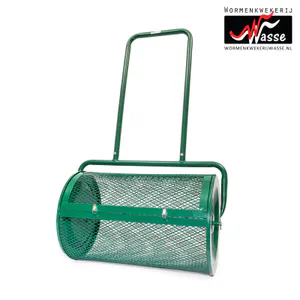
For regular maintenance, use about 1 to 2 liters per m² per application. If you want to repair a lawn, you can use about 5 liters per m². With this dosage, the worm castings will fall between the grass. Distribute the worm castings as evenly as possible over the grass. Use our Worm Castings Spreader for this.
As a general guideline, mix 10–20 liters of worm castings into 100 liters of potting soil. For potted plants, the share of worm castings can, depending on the plant and the mixture used, rise to 20–50% of the pot volume.
Worm castings can also be incorporated into seed and cutting soil. Mix it with other suitable materials, so that the mixture remains airy and matches the needs of young plants. Provided it is well matured, worm castings can also be used to sow or take cuttings directly into.
You can combine worm castings with, among other things, lava flour, guano, mealworm castings and lime. Adjust the amounts to suit the soil and the plants. When used together with lava flour, 1–5 liters of worm castings per m² is a guideline.
Unsure about the amount? Worm castings release their nutrients gradually and do not cause burning with normal use.
Number of bags | Price per bag | Total price |
|---|---|---|
1 bag | € 17.58 | € 17.58 |
10 bags | € 16.85 | €168.59 |
20 bags | € 13.48 | €269.75 |
70 bags | € 11.14 | € 778.90 |
From 10 bags (more than 15 kg) we deliver via DHL pallet freight.
Delivery takes place between 08:00 and 18:00.
Not at home? Hang a note on the door with short delivery instructions.
Delivery with a pallet truck on a hard surface.
A forklift is required. Please contact us for this.
For lawn maintenance: 1 liter per m2. After scarifying or for repair: 5 liters per m2 — lightly covering, so it settles nicely between the grass.
Worm castings can be applied all year round and have a slow release.
Yes. Organic material such as worm castings improves the soil structure of clay soil, makes the soil more airy and improves water uptake and drainage. For vegetable gardens, green manures with deep taproots (daikon radish, yellow mustard) also help well. Additionally, lava grit is also recommended for improving clay soils.
Compost and worm castings are both valuable for the soil. The difference is that worm castings have been processed by compost worms. The worms break the organic material down finely and add, among other things, slime and chitin.
Worm castings contain many different types of bacteria and fungi. With it, you add not only organic material, but also rich soil life. Our worm castings also contain more carbon than compost. When making regular compost, part of the carbon disappears as CO₂ during decomposition.
Another practical advantage is that mature worm castings do not burn plants with normal use. You can use it in the garden, around existing plants and as part of potting soil.
Worm castings, also called vermicompost, are a natural product created when compost worms process organic material. The end product is rich in organic material and beneficial soil life.
Our worm castings are produced without paper pulp. This results in beautiful, clean worm castings. In addition, the product is rich in beneficial micro-organisms such as bacteria and fungi.
Worm castings have both a fertilizing and a soil-improving effect. It provides organic nutrients and contributes to healthy soil life and good soil structure. With worm castings, you feed the soil.
Worm castings have a slow, natural release and do not burn plants with normal use.
Yes. Worm castings combine well with lava flour. When applying worm castings in combination with lava flour, we recommend about 1–5 liters of worm castings per m².
19 reviews
Showing 3 of 19 reviews
Nathalie
Ik wist dat wormenmest het zwarte goud werd genoemd, maar dit product overtreft alsnog mijn verwachtingen! Ik heb veel kamerplanten, die ik normaal altijd vloeibare plantenvoeding geef. Een tijdje terug heb ik ze voor het eerst allemaal wat wormenmest gegeven, en wauw..!! Sindsdien hebben ze vrijwel allemaal een explosie aan nieuwe bladeren. Meer dan ik normaal na het geven van plantenvoeding zie. Ook waren een aantal van mijn kamerplanten wat verzwakt geraakt door trips (ondertussen bestreden met natuurlijke vijanden), maar zelfs deze planten zijn nu weer aan het floreren! Echt top!
Reply from Wormenkwekerij Wasse
Dank je wel voor het delen Nathalie! Leuk om te horen dat de kamer planten floreren. Toen Roos en ik samen gingen wonen en haar planten gingen verpotten, zagen wij ook een enorm verschil :) Groetjes Frank
Herma
Beste Frank, Ondertussen ben ik een grote fan geworden van jouw producten en website. Afgelopen jaar heb ik al met veel plezier gebruikgemaakt van jouw producten, waaronder de wormtorens. Ook lees ik met plezier de informatie en ervaringen van andere leden en geïnteresseerden; daar leer ik iedere keer weer van. Toch heb ik even een vraag. Sorry dat ik je hiervoor stoor. Ik ben een fanatieke pluktuinierster en ben vanaf de winter tot nu eigenlijk voortdurend bezig geweest met zaadjes, zaailingen en verspeende plantjes. Van het kasje naar buiten, van de schaduw naar de zon, slakken weren enzovoort. Het is ontzettend leuk, maar eerlijk gezegd ook heel veel werk. Tot nu toe gebruikte ik Bio-Kultura als compost. Helaas heeft de meeldauw dit jaar behoorlijk toegeslagen bij mijn cosmea, verbena en druifkruid. Nu lees ik op verschillende blogs dat een gezonde bodem een belangrijke basis is voor sterke planten. Daarom vraag ik me af: zou wormenmest een betere keuze zijn om mijn planten weerbaarder te maken tegen meeldauw? Ik zit er nu aan te denken om in het najaar mijn hele tuin te voorzien van wormenmest, eventueel in combinatie met lavameel. Mijn doel is vooral om volgend jaar sterkere planten te krijgen en af te komen van die slappe eenjarigen en de steeds terugkerende meeldauw. Als extra bescherming denk ik er ook aan om Miscanthus te gebruiken als bodembedekking/mulch. Wat zou jij hierin adviseren? Is wormenmest hiervoor inderdaad een goede keuze, en zou jij de combinatie met lavameel en Miscanthus aanraden? Alvast ontzettend bedankt voor het meedenken! Hartelijke groet, Herma
Reply from Wormenkwekerij Wasse
Beste Herma, Bedankt voor je leuke mail! En je stoort absoluut niet, dit soort vragen beantwoorden we juist graag. Leuk om te horen dat je inmiddels zo enthousiast bent over onze producten en de informatie op de website. De combinatie die je noemt is wat mij betreft een hele mooie basis voor een gezonde bodem en sterke planten. Wormenmest zorgt voor organische stof en een rijk bodemleven met veel verschillende bacteriën en schimmels. In combinatie met lavameel voeg je daarnaast een breed scala aan mineralen en sporenelementen toe. Samen helpt dit om de bodem gezond en actief te houden en planten sterk en weerbaar te laten groeien. In het najaar kun je prima wormenmest over de tuin verdelen. Je hoeft daarbij geen hele dikke laag aan te brengen. Ongeveer 2 tot 5 liter per m² is voldoende. Het bodemleven en de wormen zorgen er vervolgens voor dat de wormenmest verder door de bovenste bodemlaag wordt verwerkt. Lavameel kun je tegelijkertijd over de bodem strooien. Wat bij meeldauw ook erg interessant is, is om lavameel rechtstreeks over de planten te gebruiken. Je kunt hiervoor onze lavameel verstuiver gebruiken en over het blad spuiten. Wij hebben hier erg goede ervaringen mee bij meeldauw. Zorg er wel voor dat je dit niet midden op een zonnige, warme dag doet. Het liefst 's morgens of 's avonds toepassen of een dag met weinig zon. Verbranding lijkt erg mee te vallen maar voor de zekerheid kan je het beter niet op een zonnigedag doen. Miscanthus zou ik zeker aanraden als bodembedekking. Een mulchlaag beschermt de bodem tegen uitdroging en grote temperatuurschommelingen en zorgt ervoor dat de bodem langer vochtig blijft. Daarnaast wordt het materiaal langzaam afgebroken en vormt het uiteindelijk weer voeding voor het bodemleven. Breng de Miscanthus bij voorkeur in een laag van ongeveer 3–5 cm aan. Rond jonge en kwetsbare planten zou ik de mulch niet helemaal tegen de stengels leggen, maar een klein stukje vrijhouden. Mijn aanpak zou dus zijn: in het najaar wormenmest en lavameel aanbrengen en daarna de bodem afdekken met Miscanthus. Zo voed je niet alleen de planten, maar vooral ook de bodem. In het groeiseizoen kun je het lavameel daarnaast gebruiken als bladtoepassing wanneer je meeldauw ziet ontstaan. Je kan het ook al preventief over de planten spuiten. Je voorkomt daarmee natuurlijk niet gegarandeerd iedere aantasting – meeldauw is ook sterk afhankelijk van plantensoort en weersomstandigheden – maar een gezonde, levende bodem en sterke planten vormen wel een hele goede basis. En dat zorgt uiteindelijk voor sterke planten! Mocht je je vraag op de website willen zetten dan zou dat super zijn. Dan kan iedereen direct meekijken en hopelijk inspiratie uithalen. Als er nog vragen zijn dan hoor ik het graag. Hartelijke groet, Frank Wormenkwekerij Wasse
Jamila
Hi, Ik heb onlangs een wormen hotel gestart, maar wil alvast een zakje wormenmest kopen op mijn planten een boost te geven. Ik heb twee grote bakken en die zitten vol met groenten en wil dus wat wormen mest strooien welke beveel je aan
Reply from Wormenkwekerij Wasse
Hi Jamila, Bedankt voor je vraag. Wormenmest van compostwormen beveel ik aan. Eventueel kan je er ook nog lavagruis bij gebruiken. Als er nog vragen zijn dan hoor ik het graag. Mvg Frank
Offers, tips and tricks for composting and improving your soil